26 January 2013
Healthy Eyes | Tips for Teaching Students About Eye Health
We just finished a study of light in my classroom including learning parts of the eye! So, it is a perfect time for this guest post...
Lenscrafters has been kind enough to offer some tips that you can teach your students about how to keep their eyes healthy which in turn helps our students learn!
Teach
Your Students Ways to Maintain Healthy Eyesight
Teaching kids the fundamentals of keeping their eyes healthy is a
responsibility that largely falls on the on the parents. However, teachers can
have a hand in sharing this information as well. After all, a child can’t do
their best in school if they can’t clearly see what’s being taught. Consider
discussing some of these key ways to keep eyes healthy with your students.
1. Annual
eye exams
When it comes to healthy eyes, nothing is more important than
getting regular routine eye exams. Only an eye doctor can
diagnose issues whether they’re something as common as farsightedness or
astigmatism, or more serious like glaucoma or ocular migraines. Stress this
fact to your students and consider mentioning it to parents as well.
2. Sun
protection
For most adults, it’s second nature to throw on a pair of
sunglasses on the way out the door every day. But for kids, it’s not as common.
Yet, a child’s eyes are more susceptible to the sun’s damaging rays than an
adult’s are, so encourage your students to wear sunglasses throughout the year.
For those who wear corrective lenses, suggest they inquire about prescription sunglasses at their
next eye doctor visit.
3.
Computer-related eye strain
With an increasingly digital world, kids are spending more and
more time in front of computer screens both at home and in the classroom. Teach
your students how to sit with proper posture when they’re in front of the
computer, and make sure they don’t sit too close to the screen. It’s also a
good idea to set a limit on computer time as excessive time spent looking at
the screen may cause eye strain which can lead to headaches and increased
fatigue.
4. Wearing
and taking care of glasses
For your students who wear eyeglasses, particularly the younger
ones, reinforcing proper care for eyewear while they’re at school is another
simple way to encourage healthy eyesight. If you notice they’re leaving their
glasses lying out on their desk, suggest they put them in a case to reduce the
chance of the eyeglass frames or lenses
getting damaged. Also, make sure the student actually wears his or her glasses.
Some kids might be embarrassed by their glasses and may try to avoid wearing
them, especially if they get picked on for it. However, it’s imperative they
see the board so they can learn what you’re teaching, so work with your
students to realize that wearing glasses is nothing to be ashamed of.
Lenscrafters has been kind enough to offer some tips that you can teach your students about how to keep their eyes healthy which in turn helps our students learn!
Teach
Your Students Ways to Maintain Healthy Eyesight
Teaching kids the fundamentals of keeping their eyes healthy is a
responsibility that largely falls on the on the parents. However, teachers can
have a hand in sharing this information as well. After all, a child can’t do
their best in school if they can’t clearly see what’s being taught. Consider
discussing some of these key ways to keep eyes healthy with your students.
1. Annual
eye exams
When it comes to healthy eyes, nothing is more important than
getting regular routine eye exams. Only an eye doctor can
diagnose issues whether they’re something as common as farsightedness or
astigmatism, or more serious like glaucoma or ocular migraines. Stress this
fact to your students and consider mentioning it to parents as well.
2. Sun
protection
For most adults, it’s second nature to throw on a pair of
sunglasses on the way out the door every day. But for kids, it’s not as common.
Yet, a child’s eyes are more susceptible to the sun’s damaging rays than an
adult’s are, so encourage your students to wear sunglasses throughout the year.
For those who wear corrective lenses, suggest they inquire about prescription sunglasses at their
next eye doctor visit.
3.
Computer-related eye strain
With an increasingly digital world, kids are spending more and
more time in front of computer screens both at home and in the classroom. Teach
your students how to sit with proper posture when they’re in front of the
computer, and make sure they don’t sit too close to the screen. It’s also a
good idea to set a limit on computer time as excessive time spent looking at
the screen may cause eye strain which can lead to headaches and increased
fatigue.
4. Wearing
and taking care of glasses
For your students who wear eyeglasses, particularly the younger
ones, reinforcing proper care for eyewear while they’re at school is another
simple way to encourage healthy eyesight. If you notice they’re leaving their
glasses lying out on their desk, suggest they put them in a case to reduce the
chance of the eyeglass frames or lenses
getting damaged. Also, make sure the student actually wears his or her glasses.
Some kids might be embarrassed by their glasses and may try to avoid wearing
them, especially if they get picked on for it. However, it’s imperative they
see the board so they can learn what you’re teaching, so work with your
students to realize that wearing glasses is nothing to be ashamed of.
These tips are something kids can take outside the classroom and
use for the rest of their lives. It never hurts to remind them how valuable
their eyesight is and how these simple tips can help keep them healthy and
seeing clearly for years to come.
Post is sponsored by LensCrafters



22 January 2013
Shhh...it's a Secret!
If you have read my blog before you know I like doing Random Acts of Kindness with my students. I saw this fun project that reminded me of my students as soon as I read it.

Why did this project remind me of my students? Well, they love being ninjas...ok I know this sounds kind of crazy! But, we needed to be quiet traveling the building during some testing...and the suggestion of being hallway ninjas totally worked! Now anytime we need to do something secret-like, we become "ninjas." Hey...it's only crazy if it doesn't work!
I did have to change up the project a bit to make it public school appropriate. (Plus nothing is ever cute enough for me!) Here is how the Secret Random Acts of Kindness work...
The secret R.A.K.s start with each student receiving the "Top Secret" package...
 Inside the envelope is a letter outlining the mission (in Mission: Impossible style...including the warning statement...well not really!). Also included in the package is a list of Secret R.A.K. Ideas.
The Secret Agent is to chose a "target" and perform a secret RAK. The mission is to do this each day for SEVEN days! They will list the "Target" and the R.A.K. they performed and report back at the end of the assigned time.

Look at how many I made...can you imagine how much kindness is going to be spread! Gives me chill bumps!!!!
Another thing I am doing differently from the original project is...I am not telling my students, but I have a little prize for those that successfully complete the mission. Just a little prize...nothing big! I am really trying to emphasize through all these acts that it feels better to do for others with no expectation of something in return. I can't wait to see how many of mine complete this!


I did have to change up the project a bit to make it public school appropriate. (Plus nothing is ever cute enough for me!) Here is how the Secret Random Acts of Kindness work...
The secret R.A.K.s start with each student receiving the "Top Secret" package...

The Secret Agent is to chose a "target" and perform a secret RAK. The mission is to do this each day for SEVEN days! They will list the "Target" and the R.A.K. they performed and report back at the end of the assigned time.

Another thing I am doing differently from the original project is...I am not telling my students, but I have a little prize for those that successfully complete the mission. Just a little prize...nothing big! I am really trying to emphasize through all these acts that it feels better to do for others with no expectation of something in return. I can't wait to see how many of mine complete this!
If you would like to do this project with your class, click on the picture below to download a PDF copy for yourself!
20 January 2013
The Fairy Tale News
Here is a secret...I originally did not want to be a
teacher! My undergraduate degree is
actually in broadcast journalism and legal studies/conflict resolution. Now both of these degrees do tend to come in handy
in the classroom...especially that conflict resolution training! But I also put my journalism background to
good use in Writer’s Workshop during our informational genre study.

How you may wonder did we get this to look like a real
newspaper clipping? Well I found an
awesome newspaper clipping generator. My students loved that their writing looked
like the “real” thing! The students are
excited to learn a new style of writing that they feel is used outside the four
walls of our classroom.
Do you have a classroom newspaper? What other non-traditional forms of writing do you teach your students?
After we have spent most of the quarter looking at
traditional information writing, I end with a study of the newspaper. Since many students today don’t get to touch
real paper newspapers, I bring in copies of the newspaper, and we examine the
different sections. I teach them about
headlines and the five “W”’s. We learn
about how journalists use a different style of writing by giving all the
important details right at the beginning.
We learn how journalists learn to write this way with a graphic
organizer called the inverted pyramid. ReadWriteThink.org
has excellent resources including an inverted pyramid and reporter’s guidelines
to help you teach your students newspaper writing.
We then take our learning to create our own newspaper
stories. I model for the students by
filling out an inverted pyramid for the nursery rhyme “Jack and Jill.” We modernize the story a bit and add some
additional details. Jack is rushed to
the hospital with a concussion. Jill
suffers minor injuries but will be ok.
Then I model how to transform the story into a real article.
Now is the students’ turn.
I have a pail filled with paper strips of different nursery rhymes or fairy
tale titles...it depends on how many students I have in my class that
year. Because my gifted and special
education students go out for writing instruction, this year I teach only 14
students writing, and we only needed to use nursery rhymes. Each student will come and draw a slip and
that is the article that student will write.
They get pretty creative and love to add in modern details. This year’s boy-heavy writing class got
really into adding injuries and some gory details. Here is an example...

Do you have a classroom newspaper? What other non-traditional forms of writing do you teach your students?
10 January 2013
Christmas Came Twice!
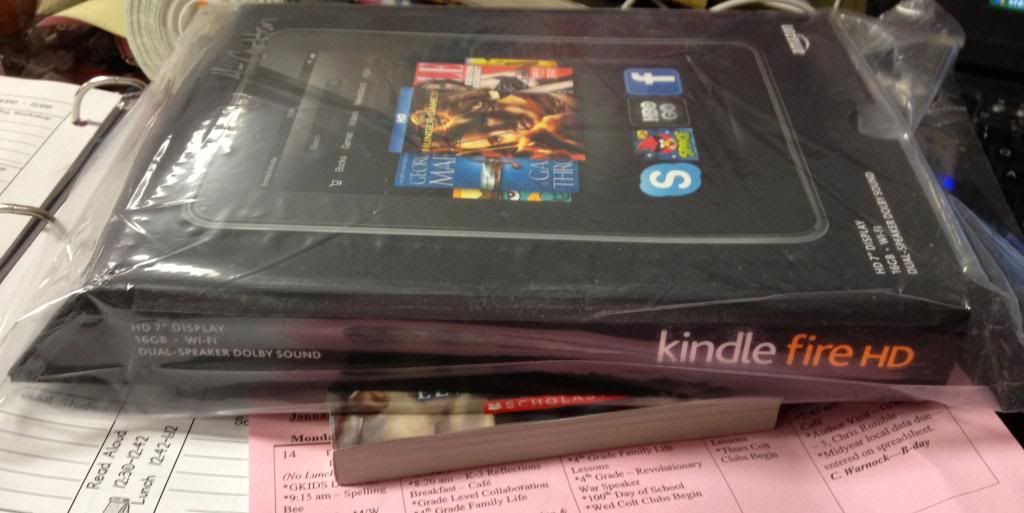
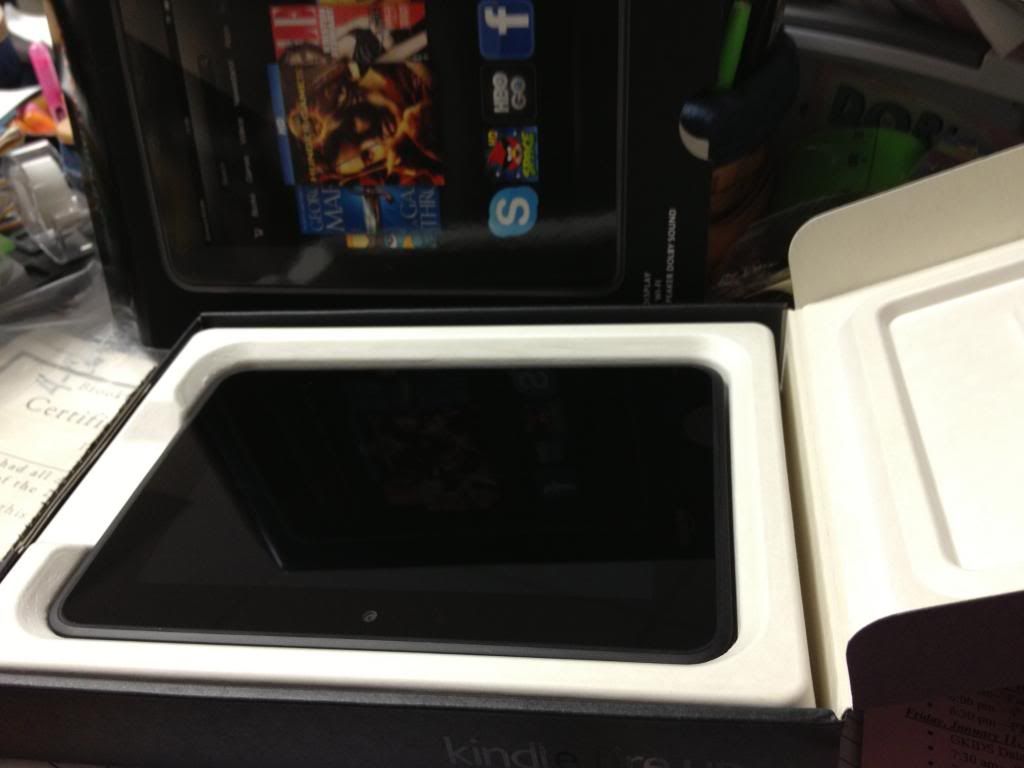
Christmas arrived again in my classroom
today! My class and I arrived back from lunch to find this on my desk...
Please forgive the mess on my desk!
My
principal gave a Kindle Fire HD to each classroom teacher! Oh happy
day!
I was such a good girl because I stayed and planned
instead of running home to play with my new toy! (We do not have access to wireless internet at school.)
We were given these tablets to not only teach with but
to help with data collection and anecdotal records...but really I am more
interested in the teaching applications. And my students can't wait to get their hands on the new device! But I'm not really sure how to make one
tablet work in a classroom of 29 students.
One of my sweeties suggested I let them take turns reading from it...I'm sure the demand will get worse once they realize it will do more than just let us read from it! ;)
So I want to hear from you...how you use your
tablets/ereaders...especially if you only have one in your classroom??? Are there any free/low cost apps you use with
your upper grade students?
Subscribe to:
Posts
(Atom)










StickerMule